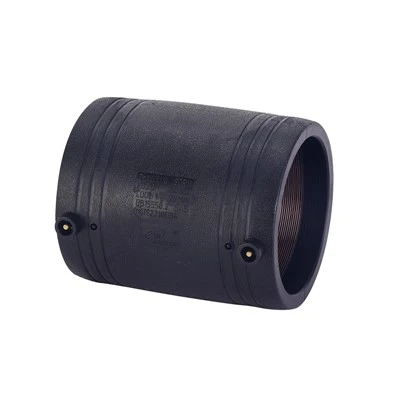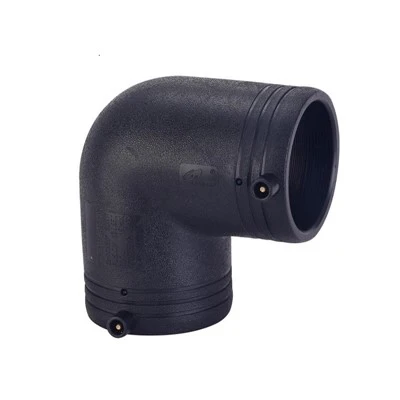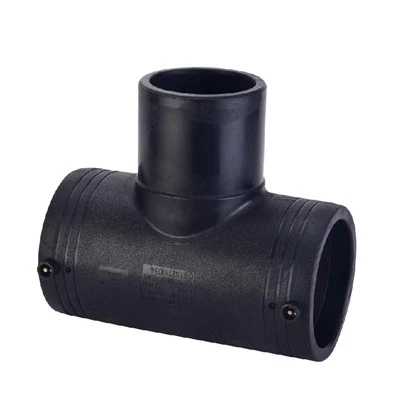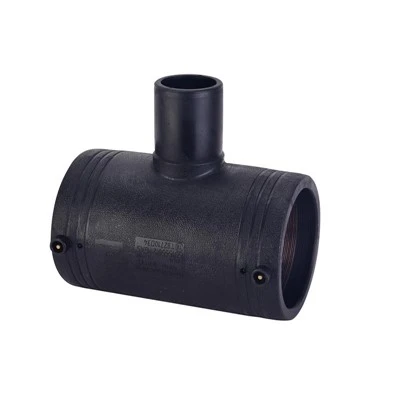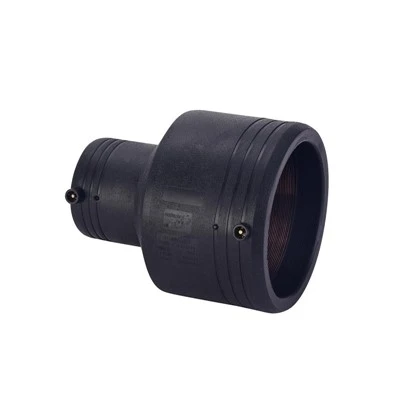
If power is interrupted during electrofusion welding of pipe fittings, power must be cut off immediately to prevent equipment burnout. The current status should be assessed to determine whether repair or replacement is necessary.
Assessing the Current Status:
Immediately observe the fusion marks on the fitting: If uncured plastic flow marks or slight surface softening remain at the joint, welding can be attempted.
Checking Cooling: Gently touch the outer layer of the fitting with a tool. If it has completely hardened (similar to the feel of cold, hard plastic), the operation must be stopped.
Situational Handling Methods:
Short Power Outage (within 30 minutes):
Before restarting the electrofusion welding machine, use an infrared thermometer to confirm that the fitting temperature is above 80℃ (the critical value for hot melting of industrial-grade plastics).
When re-entering parameters, reduce the time by 20%-30% from the original setting to avoid repeated heating and material carbonization.
Long Power Outage (over 1 hour):
Slowly peel the fitting along its axial direction using a hydraulic pipe puller. If resistance is encountered, stop immediately and switch to cutting.
Before installing a new fitting, the port must be thoroughly cleaned with acetone and chamfered.
Emergency Intervention Measures
When connecting temporary power, carefully check the phase of the welding machine's input voltage to prevent reverse connection from causing pipe bursts.
When cutting old pipe fittings, leave at least 5cm of clearance to allow sufficient operating space for secondary welding.
Quality Inspection and Verification
After repair, an airtightness test is required: first, pressurize with 3bar low-pressure air for 30 minutes to confirm no leaks, then increase the pressure to 1.5 times the working pressure and hold for 2 hours. The pressure gauge fluctuation should not exceed ±0.05bar.