Efficient Pipe Joining Solution for HDPE Pipeline Systems
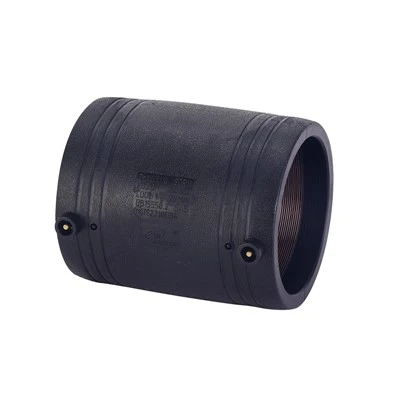
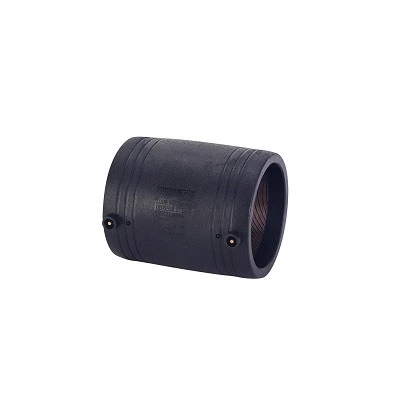
An Electrofusion Coupler is used to connect two HDPE pipes of the same diameter through an electrofusion welding process. In pipeline projects where joint reliability is critical, couplers provide a practical solution for creating fully restrained connections without introducing mechanical weak points.
Compared with flange or compression connections, electrofusion couplers are commonly selected for buried gas and water pipelines because they require minimal installation space and deliver consistent welding performance under field conditions.
Key Benefits
The integrated heating coil generates uniform heat around the pipe interface, allowing the pipe and coupler to fuse into a single structure. This process reduces the risk of leakage caused by gasket failure, bolt loosening, or ground movement.
For long-distance distribution networks, joint integrity is often one of the primary factors influencing pipeline service life. Electrofusion couplers help maintain system continuity across thousands of connection points.
Unlike butt fusion equipment, electrofusion welding requires limited working space around the joint. This makes couplers particularly suitable for:
- Narrow trench installations
- Urban utility upgrades
- Pipe repair projects
- Existing network extensions
- Congested construction sites
For maintenance contractors, reduced excavation and equipment requirements can help shorten installation time and lower project costs.
Modern couplers are designed with barcode identification systems that allow compatible welding machines to automatically read welding parameters. This helps reduce operator error and improves consistency across large-scale projects.
Typical Engineering Applications
Municipal Water Distribution Networks
Used to connect HDPE transmission and distribution pipelines in new construction and network rehabilitation projects.
01
Natural Gas Pipeline Installation
Suitable for PE80 and PE100 gas pipes where secure, leak-tight joints are required throughout the distribution system.
02
Pipeline Repair and Emergency Maintenance
Frequently used when damaged pipe sections need to be replaced without removing long pipeline segments.
03
Industrial Utility Pipelines
Applied in industrial facilities for cooling water, process water, and non-corrosive fluid transportation systems.
04
Mining and Infrastructure Projects
Used in remote construction environments where transportation and deployment of large butt fusion equipment may be impractical.
05
Specifications and Compatibility
Available Size Range:
- 20 mm to 1200 mm
- SDR 11
- SDR 17
- SDR 17.6
Compatible With:
- PE100 pipe
- PE80 pipe
- Water supply pipelines
- Gas distribution pipelines
- Industrial HDPE piping systems
Connection Type:
- Electrofusion welding
Installation Method:
- Compatible with standard electrofusion control units and barcode welding systems.
Quality Control
Quality consistency is critical for electrofusion products because welding performance depends on dimensional accuracy and heating coil positioning.
During production, key control points typically include:
- PE100 raw material verification
- Heating wire placement inspection
- Injection molding dimensional control
- Coil resistance testing
- Welding sample validation
- Visual and pressure testing
Each production batch can be traced through manufacturing records to support project quality documentation requirements.
Purchasing Considerations
When selecting an Electrofusion Coupler supplier, buyers typically evaluate:
- Pipe compatibility and SDR range
- Dimensional accuracy
- Welding consistency
- Traceability system availability
- Compliance with project specifications
- Delivery capability for large-volume orders
For utility and infrastructure projects, reliable welding performance is often more important than unit cost alone, as joint failures can result in significantly higher maintenance and replacement expenses.
FAQ

Request Technical Specifications
Contact our team for product dimensions, welding parameters, pressure ratings, and project-specific quotation support.
Hot Tags: electrofusion couplers, China electrofusion couplers manufacturers, suppliers, factory, pe electrofusion concentric reducer, pe electrofusion flange adapter, pe sdr11 electrofusion fittings, pe100 electrofusion fittings, pe100 sdr17 electrofusion fittings, polyethylene electrofusion reducer